Conveyor Belt Tracking and Idler Alignment: The Engineering Guide to Eliminating Mistracking
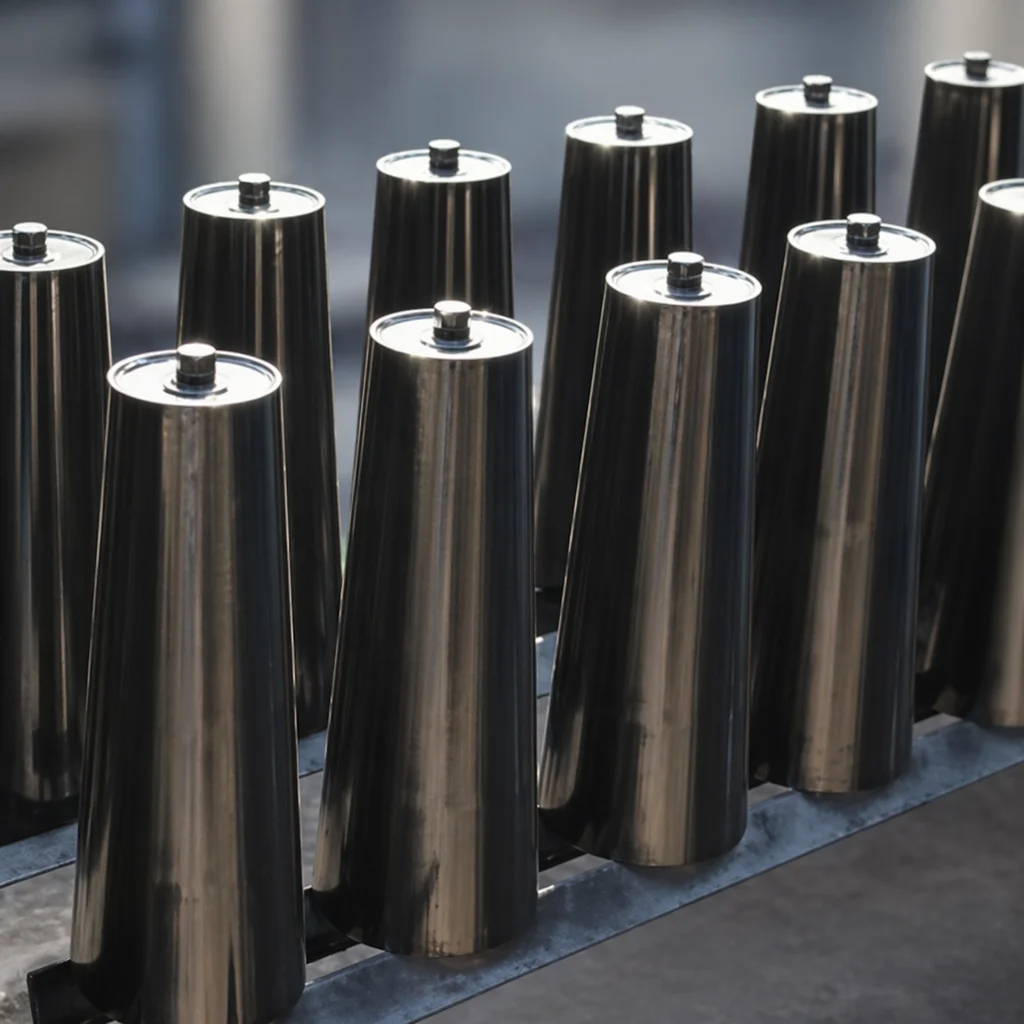
A deep-dive engineering guide on diagnosing and resolving conveyor belt mistracking. Learn how self-aligning idlers, training rollers, and proper structural alignment prevent belt damage.
In high-capacity bulk handling systems, conveyor belt mistracking (shifting off-center) is one of the most common yet destructive operational challenges. When a belt wanders off its intended path, it rubs against the steel support structure, leading to rapid edge wear, structural damage, material spillage, and potential fire hazards.
While many operators attempt to fix mistracking by adjusting belt tension, the root cause is almost always structural misalignment or incorrect idler positioning.
This guide outlines the physics of belt tracking, provides a step-by-step diagnostic framework, and evaluates the engineering solutions—such as self-aligning and training idlers—needed to maintain a perfectly centered belt.
1. The Fundamental Laws of Belt Tracking
To troubleshoot mistracking, engineers must understand the basic mechanical principles governing how a conveyor belt behaves on rotating rollers.
The “Basic Rule” of Tracking
A conveyor belt always moves toward the side of the roller that it contacts first.
If a roller is skewed (not perpendicular to the belt centerline), the belt will climb toward the end of the roller that is furthest downstream. This is because the roller acts as a steering mechanism, pushing the belt laterally as it rotates.
Belt Travel Direction Moving vertically forward
Skewed / Angled Idler Roller is skewed relative to centerline
Lateral Steering Force Belt shifts toward the side it contacts first
The Role of Tension and Friction
A conveyor belt is steered by the friction between the belt cover and the roller shell. If a roller is seized, dirty, or misaligned, the local friction profile changes, causing the belt to drift toward the area of least resistance or highest steering force.
2. Diagnosing Belt Mistracking: A Step-by-Step Framework
Before adjusting any idlers, maintenance teams must perform a systematic audit to isolate the root cause of the tracking error.
Mistracking Diagnostic Matrix
Symptom A
The same section of the belt mistracks at all points along the conveyor.
Symptom B
The belt mistracks at a specific location on the conveyor structure, regardless of which part of the belt is passing.
Symptom C
The belt tracking varies randomly, shifting left and right depending on the material load.
Step 1: Check for Material Buildup
Ensure all pulleys and idlers are clean. Spillages of sticky materials (like clay or wet iron ore) can build up on the roller shell, effectively increasing the roller’s local diameter. Because the belt moves toward the larger diameter, this crown effect causes severe mistracking.
Step 2: Verify Structural Squareness
Using a transit level or laser alignment tool, verify that:
- The conveyor frame is straight and level.
- All pulleys (head, tail, take-up) are parallel to each other and perpendicular to the centerline.
Step 3: Inspect for Seized Rollers
A frozen roller acts as a stationary drag, pulling the belt toward itself and creating localized wear. Replace any rollers that exhibit high rotational resistance.
3. Engineering Solutions: Training and Self-Aligning Idlers
When standard idlers cannot maintain belt alignment due to shifting loads or dynamic environmental factors, specialized training idlers must be integrated.
Troughed Self-Aligning Idlers (Carrying Run)
Self-aligning idlers are mounted on a central pivot bearing. They feature two guide rollers (shoe rollers) positioned on either side of the belt edge.
When the belt shifts off-center, it contacts the guide roller, forcing the entire idler frame to pivot. According to the tracking rule, this skewing action immediately steers the belt back to the center.
Belt Shifts Left Edge hits left guide roll
Idler Frame Pivots Angles forward on the left
Frictional Steering Forces belt back to center
Return Training Idlers (Return Run)
Since the return run is flat and prone to mistracking near the tail pulley, return training idlers are critical.
- Tapered Roller Design: These idlers utilize rollers with a tapered diameter. If the belt shifts, it contacts the larger outer diameter, which has a higher surface speed, naturally pulling the belt back into alignment without requiring mechanical guide shoes.
4. Best Practices for Idler Placement
To design a highly stable conveyor system, follow these placement rules:
- Near Pulleys: Position at least one self-aligning idler 15 meters (50 feet) before the head pulley and after the tail pulley.
- Spacing: On long conveyors, install a self-aligning idler every 30 to 45 meters (100 to 150 feet) along the carrying run, and every 60 meters (200 feet) on the return run.
- Transition Zones: Never place a self-aligning idler in a transition zone (where the belt changes from flat to troughed), as the high edge tension can damage the belt.
Conclusion: Achieve Perfect Alignment with VOTNE
Resolving conveyor belt mistracking requires high-quality, precision-engineered idlers. At VOTNE, our self-aligning and training idlers are designed with heavy-duty internal pivot bearings protected by multi-stage labyrinth seals to ensure reliable pivoting action even in extremely dusty or freezing environments.
Contact our engineering team today to audit your conveyor alignment or to request a quote on custom training idler assemblies.
- Email: engineering@votne.com
- Technical Support: Fill out our Contact Form to consult with a B2B parts specialist.
Tags
Related Resources
Concrete Mixer Liner Maintenance & Replacement Guide: Troubleshooting Wear Patterns, Bolt Torque Specs, and Downtime Reduction
Uneven liner wear and loose countersunk bolts are the leading causes of mixer drum gouging and unscheduled downtime in batching plants. This guide covers step-by-step maintenance protocols, clearance tuning, and failure prevention.
How to Select and Optimize Conveyor Rollers for Heavy-Duty Industrial Applications
Conveyor rollers are the unsung heroes of bulk material handling. Specifying the correct tube thickness, bearing clearance, and sealing system can reduce operational downtime by up to 40%.
Concrete Mixer Arm Maintenance & Troubleshooting Guide: Preventing Keyway Shearing, Arm Fracture, and Blade Alignment Failures
Loose hub clamp bolts and misaligned mixing arms are the leading causes of mixer shaft keyway shearing and severe liner gouging. Follow this field maintenance guide to calibrate arm pitch and eliminate emergency downtime.