The Engineering Guide to Concrete Mixer Arms: Ductile Iron GS700, Cast Alloy Metallurgy, and Fatigue Resistance
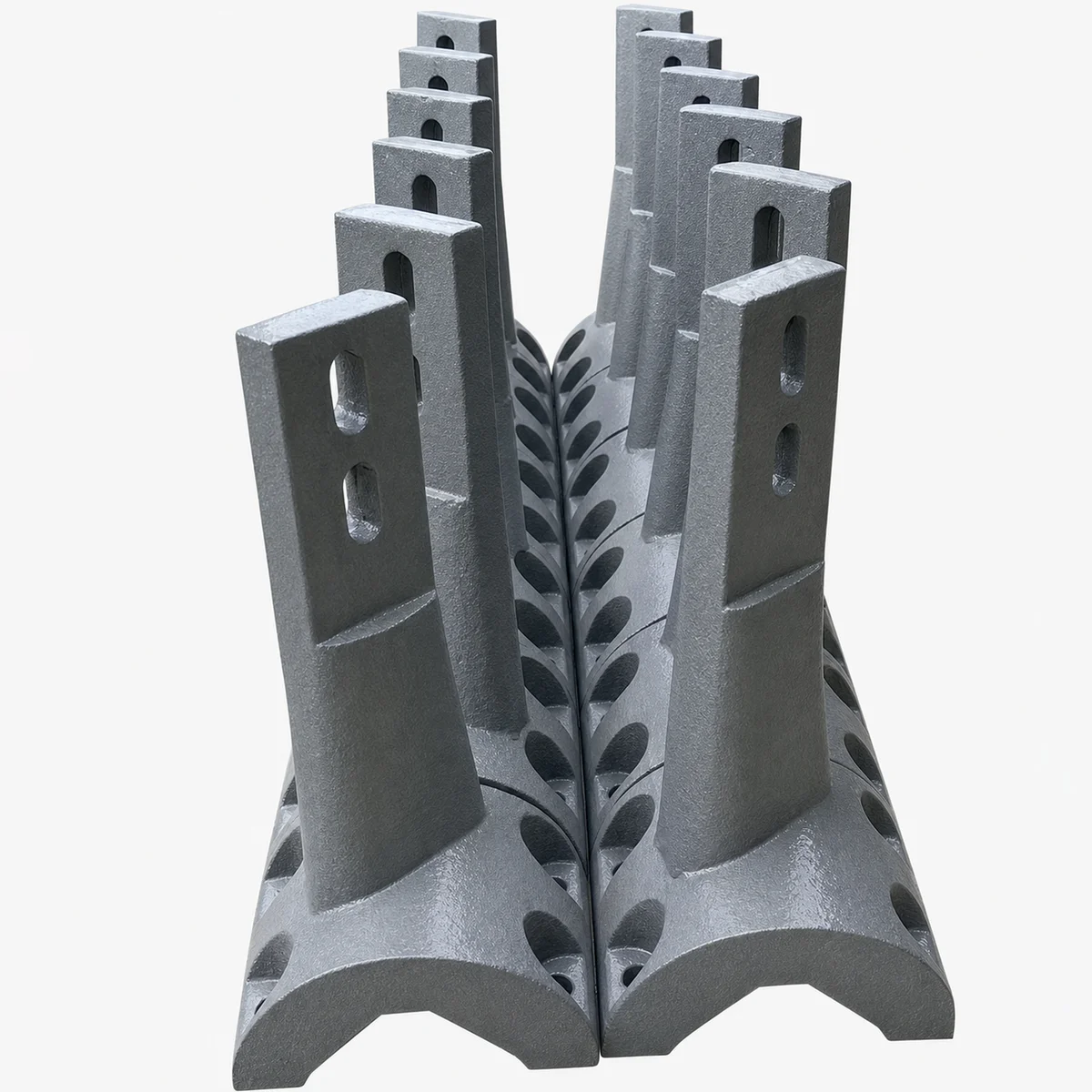
A comprehensive engineering guide on mixing arms for twin-shaft, planetary, and pan concrete mixers. Compare ductile iron GS700/GGG70 metallurgy with cast alloy steel, evaluate shaft geometry compatibility, and optimize bending fatigue life.
In industrial concrete batching plants, ready-mix production facilities, and precast factories, twin-shaft and planetary mixers generate immense mechanical torque to homogenize zero-slump, high-density concrete mixes within seconds. The primary component transmitting mechanical power from the rotating main shaft to the slurry is the mixing arm (also referred to as the mixing lever or blade holder).
Operating as a cantilever beam, every mixing arm for concrete mixers is subjected to severe cyclic bending moments, high hydraulic drag forces, and sudden aggregate wedging impacts. When a low-quality mixing arm fractures or deforms under load, the attached mixing blade is forced out of alignment. This leads to immediate liner gouging, drive shaft imbalance, damaged shaft seals, and catastrophic gearbox shock loads that can cost batching plants tens of thousands of dollars in emergency repair costs.
This technical engineering guide, produced by the RAXMEK Mechanical & Metallurgy Engineering Group, analyzes the structural mechanics, material science, fatigue resistance, and shaft coupling geometry required to select high-performance concrete mixer arms for heavy-duty industrial applications.
1. Mechanical Stress Analysis of Concrete Mixer Arms
To engineer a mixing arm capable of enduring millions of mixing cycles without fatigue failure, mechanical engineers evaluate three principal force vectors acting on the arm assembly:
Primary Mechanical Stress Vectors on Mixing Arms
Cantilever Bending: The hydraulic resistance of dense concrete acts against the mixing blade, generating a high bending moment concentrated at the neck junction where the arm transitions to the shaft mounting hub.
Shaft Keyway Torque: Rotational torque from the main drive shaft is transferred through the internal hub keyway or spline, creating high localized shear stress along the clamping split.
Sudden Shock Load: Oversized aggregate stones (40mm to 60mm) wedging between the blade tip and the rigid drum liner create extreme instantaneous impact forces exceeding 50 kN.
1.1 Bending Fatigue at the Arm Neck
Because mixing arms rotate continuously at speeds between 20 to 35 RPM through dense concrete slurry, the stress state alternates from tension to compression during each revolution. This cyclical loading induces high-cycle fatigue. If the casting contains internal gas porosity, micro-shrinkage, or sharp radius transitions at the neck, fatigue cracks initiate rapidly and propagate across the cross-section until complete catastrophic fracture occurs.
1.2 Torsional Keyway Distortion
The hub bore must maintain an exact interference fit against the main shaft. Poor material ductility or low yield strength allows the internal keyway or hexagonal flat to deform under shock loads. Once keyway play develops, the mixing arm begins to rock on the shaft, loosening clamping bolts and destroying the shaft surface.
2. Metallurgical Comparison: Choosing the Optimal Alloy Grade
Selecting the correct metallurgy for concrete mixer arms requires a precise balance between high tensile strength (to resist bending), excellent yield strength (to prevent permanent deformation), and high impact toughness (to absorb stone wedging without snapping).
| Material Grade | Tensile Strength (Rm) | Yield Strength (Rp0.2) | Elongation (A%) | Impact Toughness (Ak) | Matrix Microstructure | Performance Evaluation |
|---|---|---|---|---|---|---|
| Gray Cast Iron (HT200 / GGG25) | 200–250 MPa | N/A (Brittle) | < 0.5% | Very Low (< 2 J/cm²) | Flake Graphite in Ferrite | Unsuitable (High breakage rate under impact) |
| Standard Ductile Iron (QT450 / GGG40) | 450 MPa | 310 MPa | 10–12% | Medium (12 to 15 J/cm²) | Ferritic-Pearlitic Nodular | Fair for light-duty mortar mixers |
| High-Strength Ductile Iron (GS700 / GGG70) | 700–750 MPa | 420–480 MPa | 3–5% | High (10 to 14 J/cm²) | Pearlitic Spheroidized Graphite | RAXMEK Standard (Excellent strength & fatigue life) |
| Ni-Hard / High-Cr Cast Alloy | 550–650 MPa | 450 MPa | < 0.8% | Low (4 to 6 J/cm²) | Martensite + M7C3 Carbides | High wear resistance, but prone to shock breakage |
| Forged Cr-Mo Alloy Steel (42CrMo4) | 850–1000 MPa | 650–750 MPa | 12–15% | Extreme (> 35 J/cm²) | Tempered Martensite / Bainite | RAXMEK Heavy Duty (Unbreakable, for dam & mass concrete) |
3. Ductile Iron GS700 / GGG70 Spheroidization Science
At RAXMEK, our foundry engineers specify GS700 high-strength pearlitic ductile iron (equivalent to GGG70 / EN-GJS-700-2 / QT700-2) as the optimal material for commercial twin-shaft concrete mixer arms.
Standard GGG40 / Gray Iron
Flake or irregular graphite structures act as microscopic internal notches, concentrating stress and causing sudden brittle fractures under aggregate wedging.
Tensile Strength: 400 to 450 MPa
RAXMEK GS700 Pearlitic Ductile Iron
Features over 90% perfectly spherical graphite nodules (Grade 1/2 Spheroidization) supported by a refined pearlitic matrix that stops crack growth.
Tensile Strength: 700 to 750 MPa
3.1 The Role of Graphite Spheroidization
In standard gray iron, graphite exists as sharp flakes. These flakes act as micro-cracks that concentrate stress under bending forces. In RAXMEK GS700 ductile iron, magnesium-cerium inoculation forces graphite to precipitate as isolated, perfectly round spheres (nodules). This spherical shape eliminates stress concentration points, allowing the alloy to absorb massive dynamic bending loads without cracking.
3.2 Pearlitic Matrix Strength
To achieve a tensile strength of 700 MPa without heat-treating distortion, RAXMEK controls the copper and manganese micro-alloying additions to produce a fully pearlitic matrix. Pearlite consists of alternating lamellae of ferrite and cementite (Fe3C), offering exceptional resistance to mechanical wear and high fatigue strength under continuous cyclic bending.
4. Shaft Interface Geometries & Clamping Mechanics
The connection between the mixing arm hub and the main mixer shaft must transfer full motor torque while allowing precise axial positioning during assembly. Concrete mixers utilize three primary shaft coupling configurations:
Mixer Shaft Coupling Interface Types
Standard in European twin-shaft mixers (BHS, SICOMA). 90-degree indexing with split-clamp securing.
Provides 60-degree indexing for optimized helical blade spiral positioning and reduced mixing resistance.
Common in single-shaft and planetary mixers. Relies on precision key fitting and heavy wedge locking.
4.1 Square vs. Hexagonal Shaft Advantages
- Square Shafts (90-Degree Indexing): Provide maximum flat-contact surface area for heavy torque transmission. Used widely in large 2.0m³ to 4.0m³ twin-shaft ready-mix mixers.
- Hexagonal Shafts (60-Degree Indexing): Allow finer rotational adjustment of mixing arms. This enables engineers to configure continuous 6-phase helical mixing spirals along the shaft length, reducing peak torque demand on drive motors by up to 15%.
4.2 Split-Hub Clamping Dynamics
RAXMEK mixing arms feature precision-machined split clamping hubs with high-tensile Grade 10.9 or 12.9 socket head cap screws. As the clamping bolts are torqued, the split hub flexes elastically, creating high normal clamping forces against the shaft flats. This zero-backlash friction fit prevents micro-fretting corrosion and eliminates keyway play.
5. Structural Functional Types of Mixing Arms
Inside a twin-shaft concrete mixer, mixing arms are arranged in a specific spatial sequence along each counter-rotating shaft to form a continuous mixing ribbon. Each position performs a distinct hydrodynamic role:
Functional Mixing Arm Classification
5.1 Axial Slurry Recirculation & Helical Spiral
If all mixing arms were pitched at the same angle, material would accumulate at one end of the mixer trough. By alternating Left Side Mixing Arms and Right Side Mixing Arms in a synchronized helical pattern, concrete is continuously forced into a counter-current figure-8 movement pattern. This 3D circulation achieves 98% mix homogeneity within 30 seconds of mixing time.
5.2 End Wall Scraper Arms
Mounted at the extreme ends of the mixing shafts, specialized scraper arms hold side bottom scrapers and end wall scrapers. These arms keep end wall liners clean and prevent fine cement paste from drying and building up around shaft seals.
6. Financial Total Cost of Ownership (TCO) Analysis
When purchasing replacement mixing arms, procurement departments should evaluate the total financial risk associated with arm breakage versus the initial purchase price.
6.1 TCO Case Study: 2.5 m³ Ready-Mix Concrete Plant (2 Twin-Shaft Mixers)
- Annual Output: 250,000 m³ structural concrete.
- Comparison: Low-Cost Gray Iron Arms vs. RAXMEK GS700 Pearlitic Ductile Iron Arms.
| Cost Metric | Low-Cost Gray Iron Arms | RAXMEK GS700 Ductile Arms | Net Operational Benefit |
|---|---|---|---|
| Initial Cost (Full Set of 16 Arms) | $2,400 | $4,200 | +$1,800 initial investment |
| Average Service Life | 40,000 m³ (Frequent snaps) | 180,000 m³ | 4.5x operational lifespan |
| Arm Breakage Incidents (per 180k m³) | 6 Sudden Fractures | 0 Fractures | Eliminates 6 emergency shut-downs |
| Associated Liner & Blade Damage | $9,600 (Gouged liners) | $0 | Saves $9,600 in damaged parts |
| Emergency Repair Downtime Labor | $7,200 (36 hours) | $0 | Saves $7,200 in maintenance labor |
| Lost Ready-Mix Concrete Deliveries | $15,000 (Standby costs) | $0 | Saves $15,000 in plant penalties |
| TOTAL EXPENDITURE (180k m³ Output) | $36,600 | $4,200 | Net Savings: $32,400 |
Economic Takeaway: Investing in RAXMEK GS700 Ductile Iron Mixing Arms completely eliminated catastrophic arm snap incidents, yielding net financial savings of $32,400 over 180,000 m³ of batching operations.
7. Quality Assurance & Custom Manufacturing by RAXMEK
As an ISO 9001 certified manufacturer of concrete machinery wear parts, RAXMEK enforces rigorous quality control standards across every stage of mixing arm production:
- Computerized Thermal Simulation: MagmaSoft mold filling simulation ensures zero internal shrink porosity at the critical arm-to-hub neck junction.
- 100% Ultrasonic & Magnetic Particle Testing: Every mixing arm undergoes non-destructive NDT inspection to guarantee defect-free subsurface integrity.
- Precision CNC Bore Machining: Shaft bore tolerances machined to H7 precision to ensure perfect zero-clearance fit on square and hexagonal shafts.
- Complete OEM Compatibility: Drop-in replacement mixing arms for BHS, SICOMA, Liebherr, SIMI, Teka, ELKON, MEKA, and Linz concrete mixers.
Consult with a RAXMEK Engineering Specialist
Whether you need standard replacement arms or custom-designed heavy-duty alloy arms for abrasive aggregate mixing, RAXMEK application engineers are ready to assist.
- Email Technical Inquiries: info@raxmek.com / sales@votne.com
- Direct Engineering Consultation: Submit your mixer model specifications through our Online Contact Form to receive CAD drawings and B2B pricing within 24 hours.
Tag
Risorse Correlate
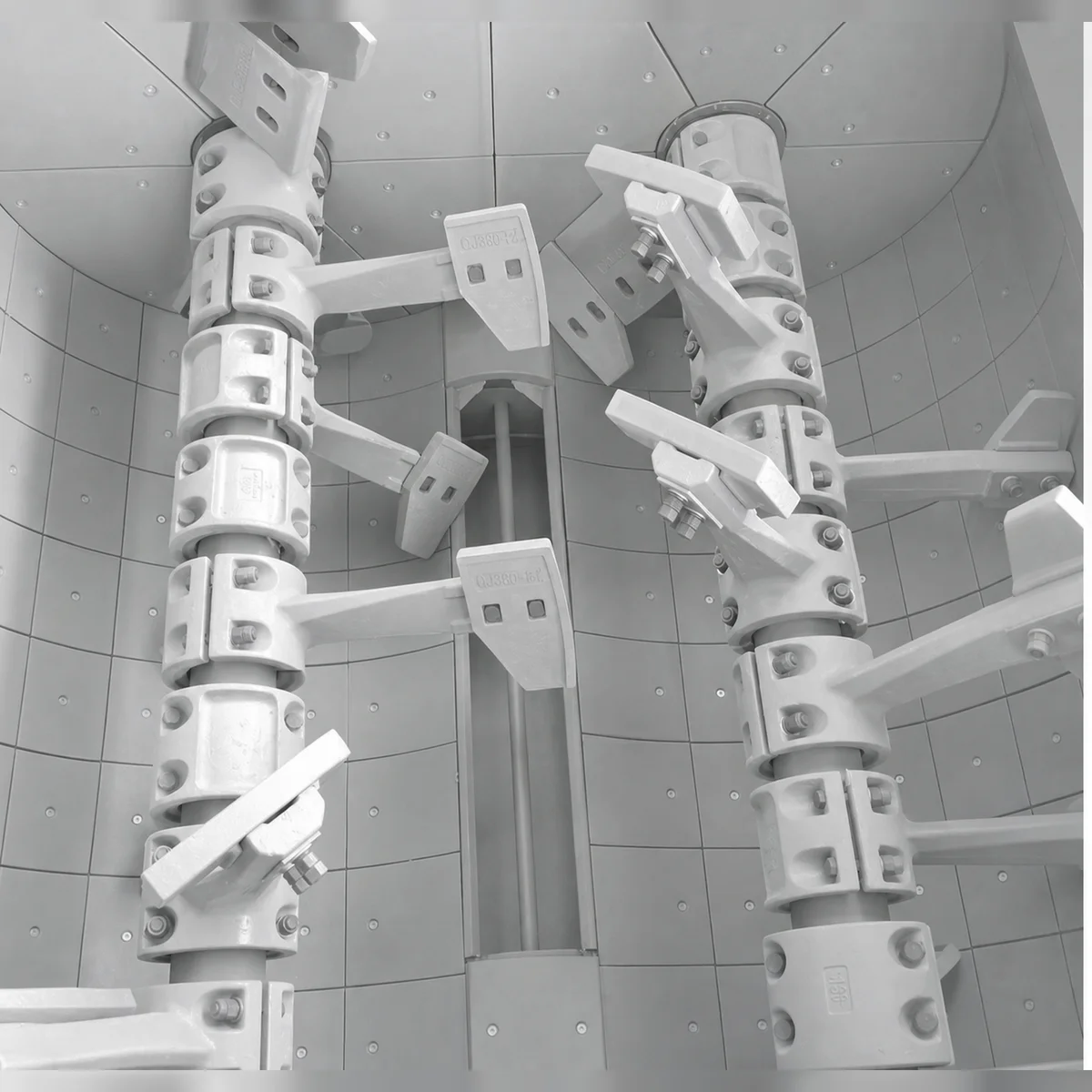
Concrete Mixer Liner Maintenance & Replacement Guide: Troubleshooting Wear Patterns, Bolt Torque Specs, and Downtime Reduction
Uneven liner wear and loose countersunk bolts are the leading causes of mixer drum gouging and unscheduled downtime in batching plants. This guide covers step-by-step maintenance protocols, clearance tuning, and failure prevention.
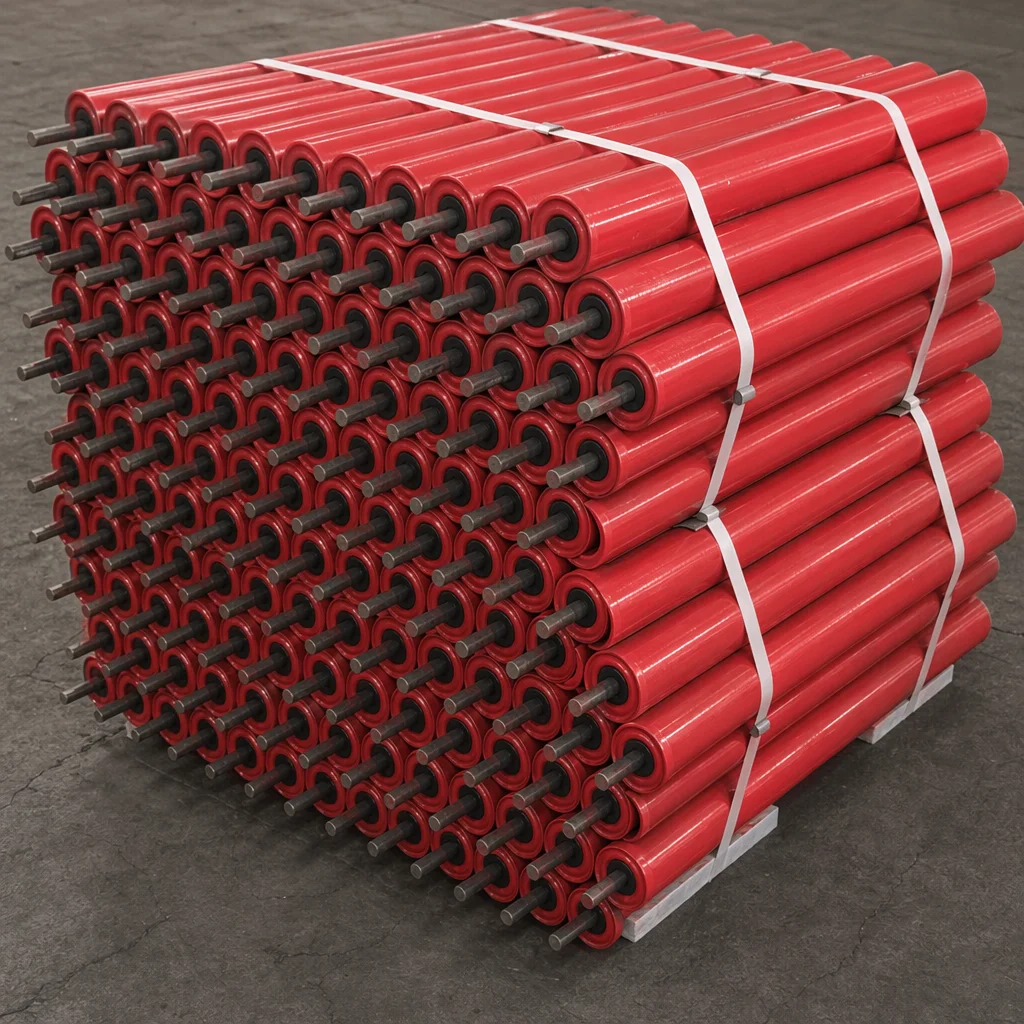
How to Select and Optimize Conveyor Rollers for Heavy-Duty Industrial Applications
Conveyor rollers are the unsung heroes of bulk material handling. Specifying the correct tube thickness, bearing clearance, and sealing system can reduce operational downtime by up to 40%.
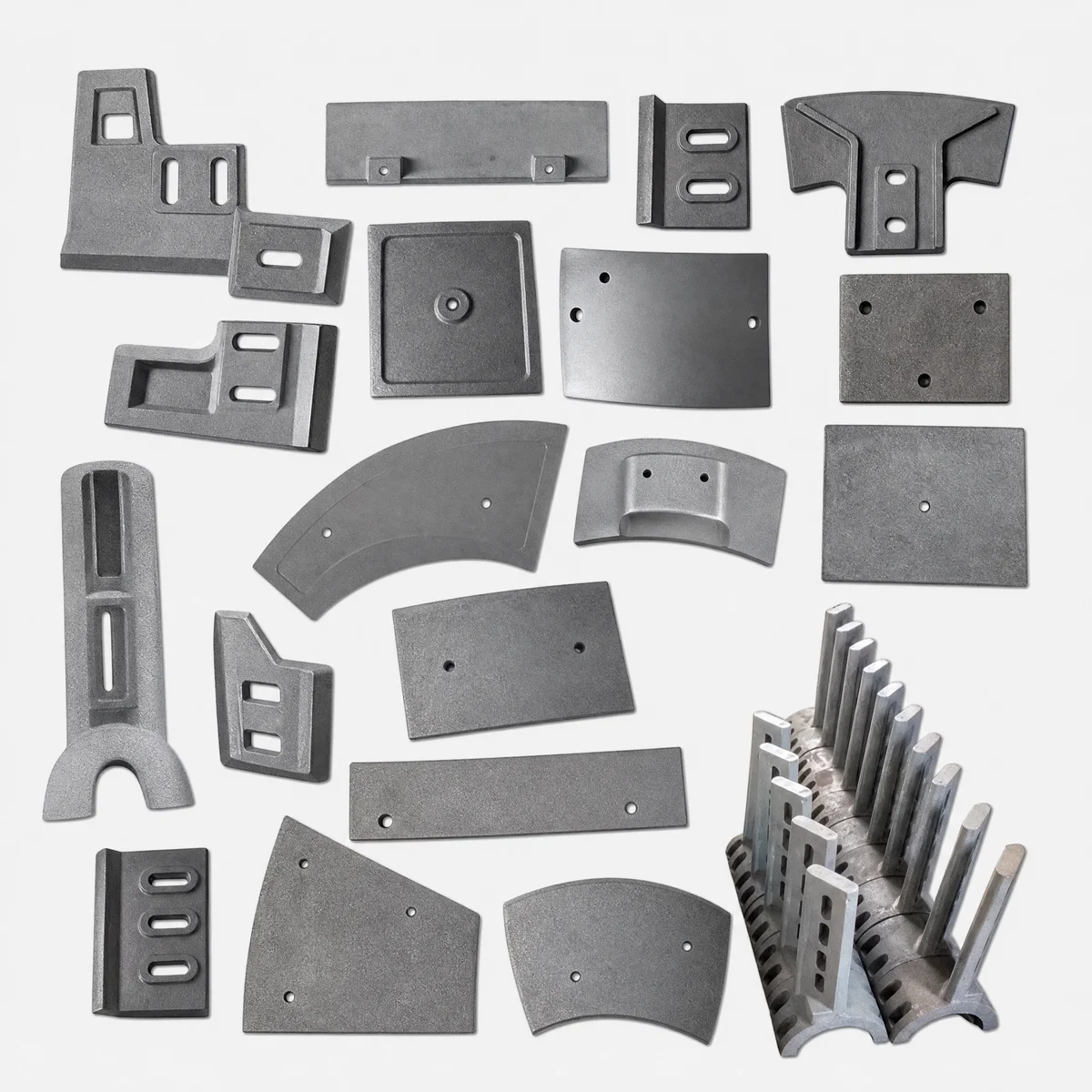
Concrete Mixer Arm Maintenance & Troubleshooting Guide: Preventing Keyway Shearing, Arm Fracture, and Blade Alignment Failures
Loose hub clamp bolts and misaligned mixing arms are the leading causes of mixer shaft keyway shearing and severe liner gouging. Follow this field maintenance guide to calibrate arm pitch and eliminate emergency downtime.