The Engineering Guide to Concrete Mixer Blades & Scrapers: High-Chromium Alloys, Tungsten Carbide Hardfacing, and Mixing Homogeneity
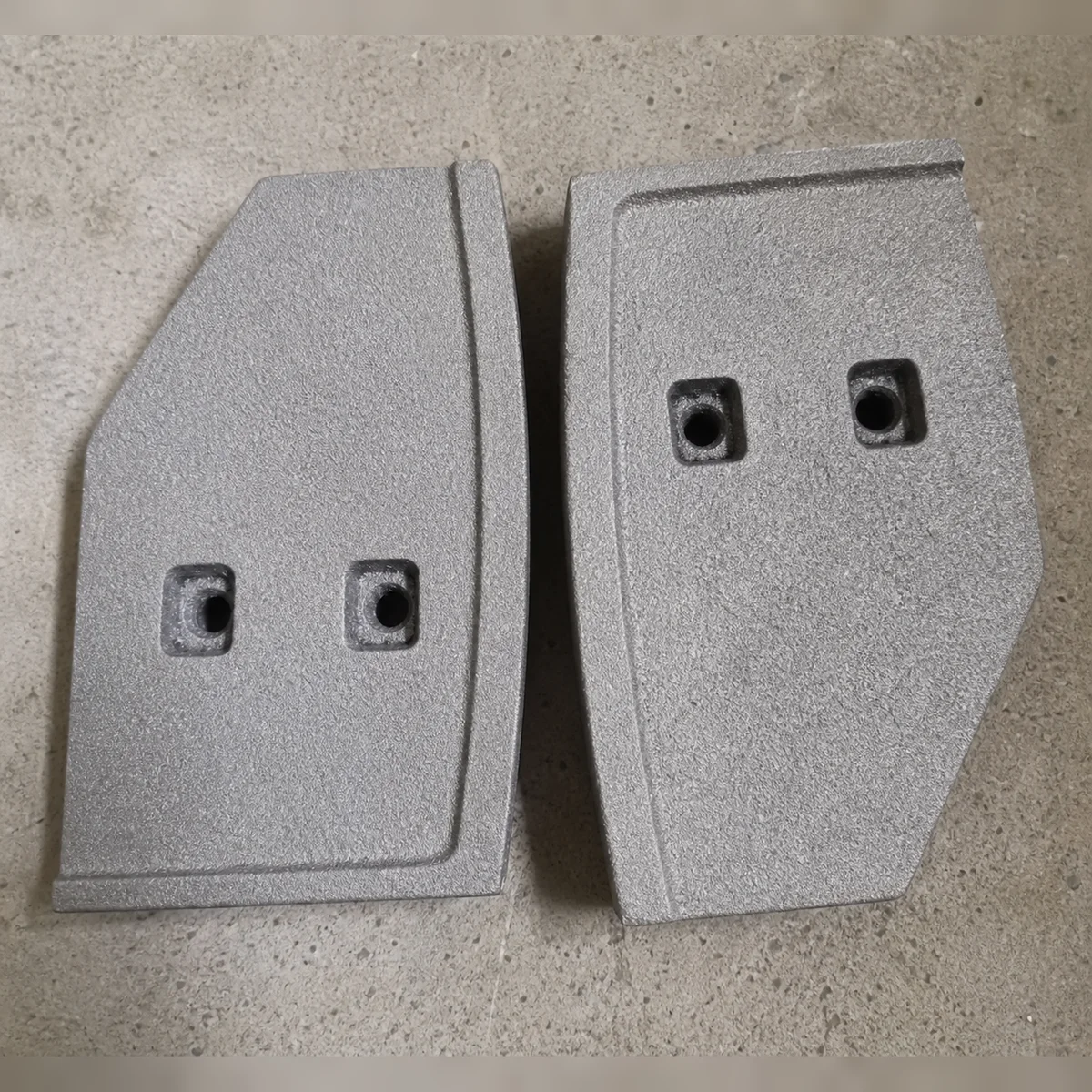
A comprehensive technical guide on concrete mixer mixing blades and scrapers. Compare Cr20/Cr26 high-chromium metallurgy with tungsten carbide hardfacing, analyze blade geometry, and optimize mix homogeneity.
In commercial ready-mix concrete batching plants, precast element manufacturing facilities, and dam construction projects, twin-shaft and planetary mixers must achieve 98% mix homogeneity within 30 to 45 seconds of mixing time. The primary components responsible for shearing aggregate particles, circulating cement paste, and scraping drum liners clean are concrete mixer blades and scrapers.
Operating at the front line of mixing action, every concrete mixer blade—including main mixing blades, left side scrapers, right side scrapers, side bottom scrapers, and central scrapers—is exposed to continuous high-stress sliding friction, heavy aggregate impact, and micro-particle scouring. When blades wear thin or lose their optimal angle profile, mixing efficiency drops sharply. Batch times must be extended, drive motor power consumption increases, unmixed cement pockets form, and worn blade tips risk gouging expensive trough liners.
This technical engineering guide, produced by the RAXMEK Wear Metallurgy & Hydrodynamics Group, provides an in-depth analysis of blade material science, carbide microstructures, hardfacing technologies, blade geometry optimization, and economic total cost of ownership (TCO) models.
1. Hydrodynamics & Wear Mechanics of Concrete Mixer Blades
To engineer a mixing blade capable of surviving millions of tons of concrete production, wear engineers evaluate the hydraulic and mechanical forces acting across the blade face:
Tribological Wear Forces on Mixing Blades & Scrapers
Aggregate Drop Shock: Coarse granite and gravel dropping into the rotating mixer strike the leading edge of the blade at high velocity, demanding high fracture toughness to prevent edge chipping.
Inter-Particle Grinding: Quartz sand grains (Mohs hardness 7.0) are trapped between the moving blade tip and the stationary drum liner under multi-ton hydraulic pressure.
Fluid Shear Erosion: Heavy concrete slurry flowing over the curved front face of the blade causes continuous micro-cutting and matrix erosion across the casting body.
1.1 The Mechanism of Blade Tip Recession
As the outer tip of a mixing blade sweeps through dense concrete, sharp aggregate grains act like miniature cutting tools. If the blade material possesses a lower hardness than the aggregate minerals (such as quartz at 1100 HV), the metal matrix is rapidly gouged away. As the blade tip recedes, the gap between the blade and the trough liner widens. This allows stagnant concrete layers to build up on the liner, reducing effective mixing drum volume.
1.2 Scraper Edge Drag & Friction Heat
Side scrapers and bottom scrapers are designed to ride at minimal clearance (1.5mm to 3.0mm) against drum end walls and floor liners. High sliding friction generates localized thermal spikes. If the scraper material lacks thermal stability or contains soft graphite phases, the cutting edge rounds off rapidly, leaving cement paste trails that harden into scale.
2. Metallurgical Comparison: Selecting the Optimal Blade Alloy
The table below provides a technical engineering comparison of the primary metallic alloys and hardfacing technologies specified for concrete mixer blades and scrapers:
| Material / Technology | Chemical Composition / Structure | Matrix Hardness | Carbide Micro-Hardness | Fracture Toughness | Wear Resistance to Quartz Sand |
|---|---|---|---|---|---|
| Chilled Cast Iron | Low alloy iron with iron carbide network | 45–50 HRC | 900 to 1000 HV (Fe3C) | Very Low (< 2 J/cm²) | Low (Wears out in under 20,000 m³) |
| Ni-Hard 4 White Iron | C: 3.0%, Ni: 5.5%, Cr: 9.0% | 58–62 HRC | 1100 to 1300 HV (M3C) | Low to Medium (4 to 6 J/cm²) | Good for fine aggregate mortar |
| Cr15 High-Chromium Alloy | C: 2.8%, Cr: 15.0%, Mo: 1.0% | 60–63 HRC | 1300 to 1500 HV (M7C3) | Medium (6 to 8 J/cm²) | Very Good for standard ready-mix |
| Cr26 Super High-Cr (RAXMEK Standard) | C: 3.2%, Cr: 26.0%, Mo/V modified | 63–66 HRC | 1500 to 1800 HV (M7C3) | High (8 to 12 J/cm²) | Excellent (3x life vs Ni-Hard 4) |
| Tungsten Carbide PTA Hardfaced (RAXMEK Premium) | Cr26 Cast Base + W2C/WC Composite Overlay | Base: 64 HRC / Overlay: >70 HRC | 2200 to 2600 HV (WC) | Very High | Extreme (For Basalt & Mass Concrete) |
3. The Science of High-Chromium Alloys (Cr26) & Tungsten Carbide Hardfacing
At RAXMEK, our wear engineers utilize two advanced manufacturing technologies to maximize concrete mixer blade service life:
RAXMEK Cr26 Super High-Chromium Cast Alloy
Utilizes a high chromium-to-carbon ratio (Cr/C at or above 7.0) to form a dense distribution of hexagonal M7C3 carbides (1500 to 1800 HV) bound inside a tempered martensitic matrix.
Bulk Hardness: 63 to 66 HRC
RAXMEK Tungsten Carbide PTA Hardfacing
Plasma Transferred Arc (PTA) welding deposits a 3mm to 5mm thick layer of spherical tungsten carbide particles (2200 to 2600 HV) directly onto high-wear blade leading edges.
Carbide Hardness: 2200 to 2600 HV
3.1 Why M7C3 Carbides Resist Quartz Abrasion
Quartz sand aggregate possesses a micro-hardness of approximately 1100 HV. Standard steel or low-chromium blades (900 to 1100 HV) are easily gouged by quartz grains. RAXMEK Cr26 alloy features M7C3 eutectic carbides with a micro-hardness of 1500 to 1800 HV. Because these carbides are significantly harder than quartz, aggregate grains slide across the blade surface without cutting into the metal.
3.2 Tungsten Carbide PTA Overlay Technology
For severe applications involving crushed basalt, iron slag, or manufactured silica sand, RAXMEK applies a Tungsten Carbide (WC/W2C) composite overlay along the leading edge and outer tip of the blade. The tungsten carbide particles (hardness over 2200 HV) act as microscopic shields, preventing leading-edge recession and keeping the blade tip razor-sharp throughout its service life.
4. Functional Taxonomy & Geometry of Mixer Blades & Scrapers
A twin-shaft or planetary concrete mixer relies on five specialized types of mixing blades and scrapers working in harmony:
Concrete Mixer Blade & Scraper Functional Taxonomy
Curved aerofoil profile mounted on central mixing arms. Lifts and shears concrete slurry axially.
Angled scraper blade mounted on the left end arm to prevent slurry accumulation on end liners.
Mirror-image scraper positioned on the right end arm to maintain shaft seal clearance.
Specially contoured blade that sweeps the curved transition corner between wall and drum liners.
Heavy-section central blade that clears the high-turbulence crossover zone between shafts.
Flexible elastomer scrapers specified for planetary mortar mixers to eliminate liner scratching.
5. Blade Clearance Calibration & Energy Efficiency Optimization
Proper clearance calibration between mixing blade tips and trough liners is the single most critical factor influencing drive motor power consumption and batch mixing speed:
Allows liquid cement paste to form a hydrodynamic boundary layer. Minimizes direct stone-crushing friction, reduces motor current demand by 12%, and prevents drum liner gouging.
Causes unmixed concrete layers to harden on trough liners, increasing batch mixing time from 30s to 55s and consuming an extra 0.45 kWh of electricity per cubic meter.
6. Total Cost of Ownership (TCO) & Energy ROI Analysis
For commercial ready-mix plants batching over 200,000 m³ annually, upgrading to RAXMEK Cr26 Super High-Chromium Blades delivers significant direct parts savings and electrical energy reductions.
6.1 TCO Case Study: 3.0 m³ Twin-Shaft Ready-Mix Concrete Plant
- Annual Plant Output: 300,000 m³ of structural concrete.
- Comparison: Standard Ni-Hard 4 Blades vs. RAXMEK Cr26 Super High-Chromium Blades.
| Financial Metric | Standard Ni-Hard 4 Blades | RAXMEK Cr26 Super Blades | Net Operational Benefit |
|---|---|---|---|
| Initial Set Cost (Full Set of 18 Blades) | $2,800 | $5,200 | +$2,400 initial investment |
| Average Blade Lifespan | 50,000 m³ | 200,000 m³ | 4x service lifespan |
| Replacement Cycles (per 200k m³) | 4 Sets | 1 Set | Saves 3 replacement cycles |
| Total Blade Procurement Cost | $11,200 | $5,200 | Saves $6,000 in parts |
| Maintenance Labor ($1,500/change) | $6,000 (4 changes) | $1,500 (1 change) | Saves $4,500 in labor |
| Electrical Energy Savings (0.25 kWh/m³) | $0 (Baseline) | $6,000 ($0.12/kWh rate) | Saves $6,000 in electricity |
| TOTAL EXPENDITURE (200k m³ Output) | $23,200 | $12,700 | Net Savings: $10,500 |
| DIRECT SAVINGS PER CUBIC METER | $0.116 / m³ | $0.063 / m³ | 45.7% Total Cost Reduction |
7. RAXMEK Foundry Engineering & Quality Guarantee
As a specialized ISO 9001 certified manufacturer of concrete machinery wear components, RAXMEK maintains strict quality control standards across all mixing blade and scraper production lines:
- 100% Spectrometric Chemical Analysis: Every casting heat is tested via optical emission spectrometry to guarantee exact Cr, C, Mo, V, and Ni alloy ratios.
- Double Sub-Critical Tempering: Heat treatment transforms all retained austenite into stable tempered martensite, guaranteeing zero in-service cracking.
- Dimensional CNC Alignment: Mounting bolt holes and rear attachment pads are CNC-machined to ensure 100% exact alignment on OEM mixing arms.
- OEM Compatibility: Replacement mixing blades and scrapers for BHS, SICOMA, Liebherr, SIMI, Teka, ELKON, MEKA, and Linz twin-shaft and planetary mixers.
Request a Wear Audit & Quote
Whether you require standard replacement blades or custom tungsten carbide hardfaced scrapers for aggregate mixing, RAXMEK application engineers are ready to assist.
- Email Technical Inquiries: info@raxmek.com / sales@votne.com
- Direct Consultation: Submit your mixer model specifications via our Online Contact Form to receive CAD drawings and competitive B2B pricing within 24 hours.
Tag
Risorse Correlate
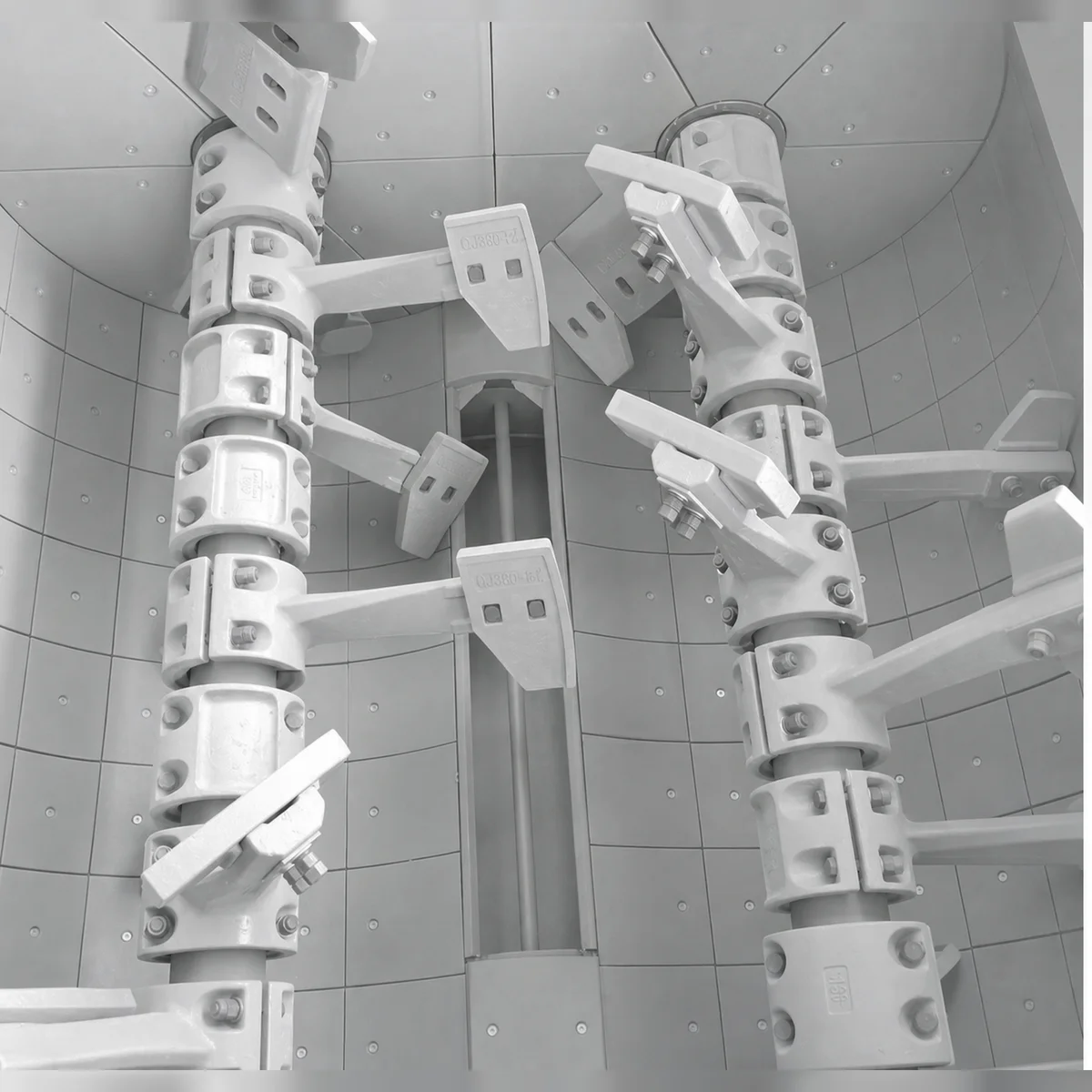
Concrete Mixer Liner Maintenance & Replacement Guide: Troubleshooting Wear Patterns, Bolt Torque Specs, and Downtime Reduction
Uneven liner wear and loose countersunk bolts are the leading causes of mixer drum gouging and unscheduled downtime in batching plants. This guide covers step-by-step maintenance protocols, clearance tuning, and failure prevention.
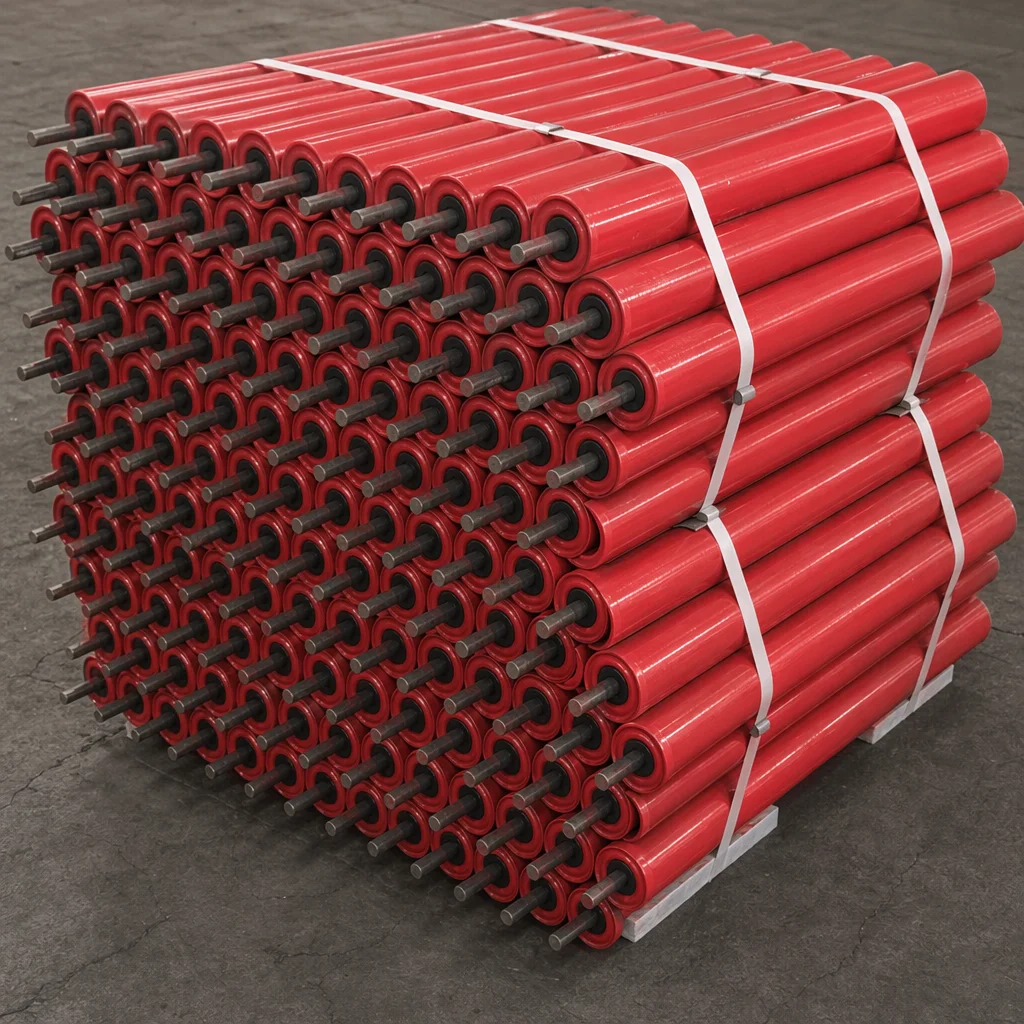
How to Select and Optimize Conveyor Rollers for Heavy-Duty Industrial Applications
Conveyor rollers are the unsung heroes of bulk material handling. Specifying the correct tube thickness, bearing clearance, and sealing system can reduce operational downtime by up to 40%.
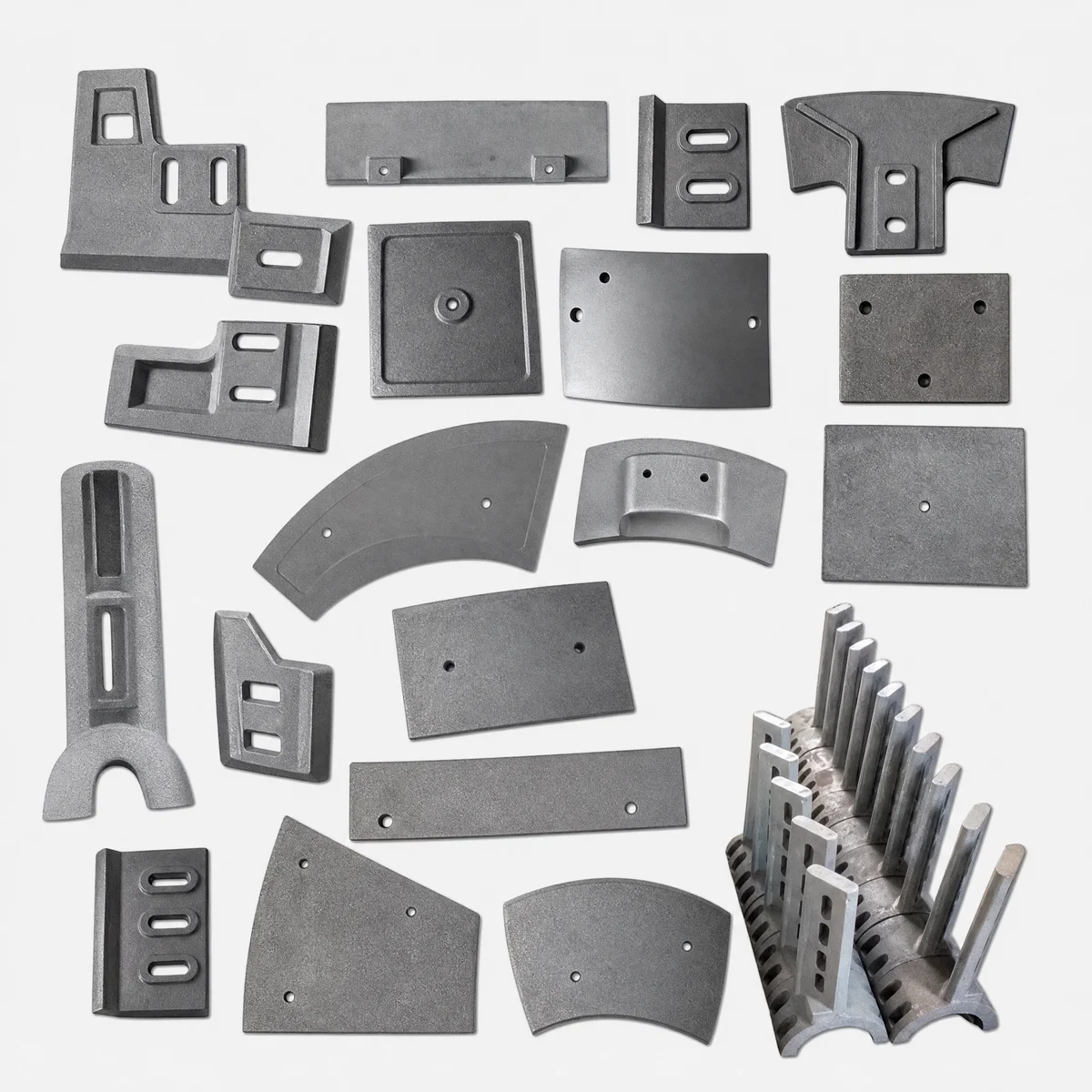
Concrete Mixer Arm Maintenance & Troubleshooting Guide: Preventing Keyway Shearing, Arm Fracture, and Blade Alignment Failures
Loose hub clamp bolts and misaligned mixing arms are the leading causes of mixer shaft keyway shearing and severe liner gouging. Follow this field maintenance guide to calibrate arm pitch and eliminate emergency downtime.