The Engineering Guide to Concrete Mixer Liners: High-Chromium Alloys, Ni-Hard Metallurgy, and Wear Life Optimization
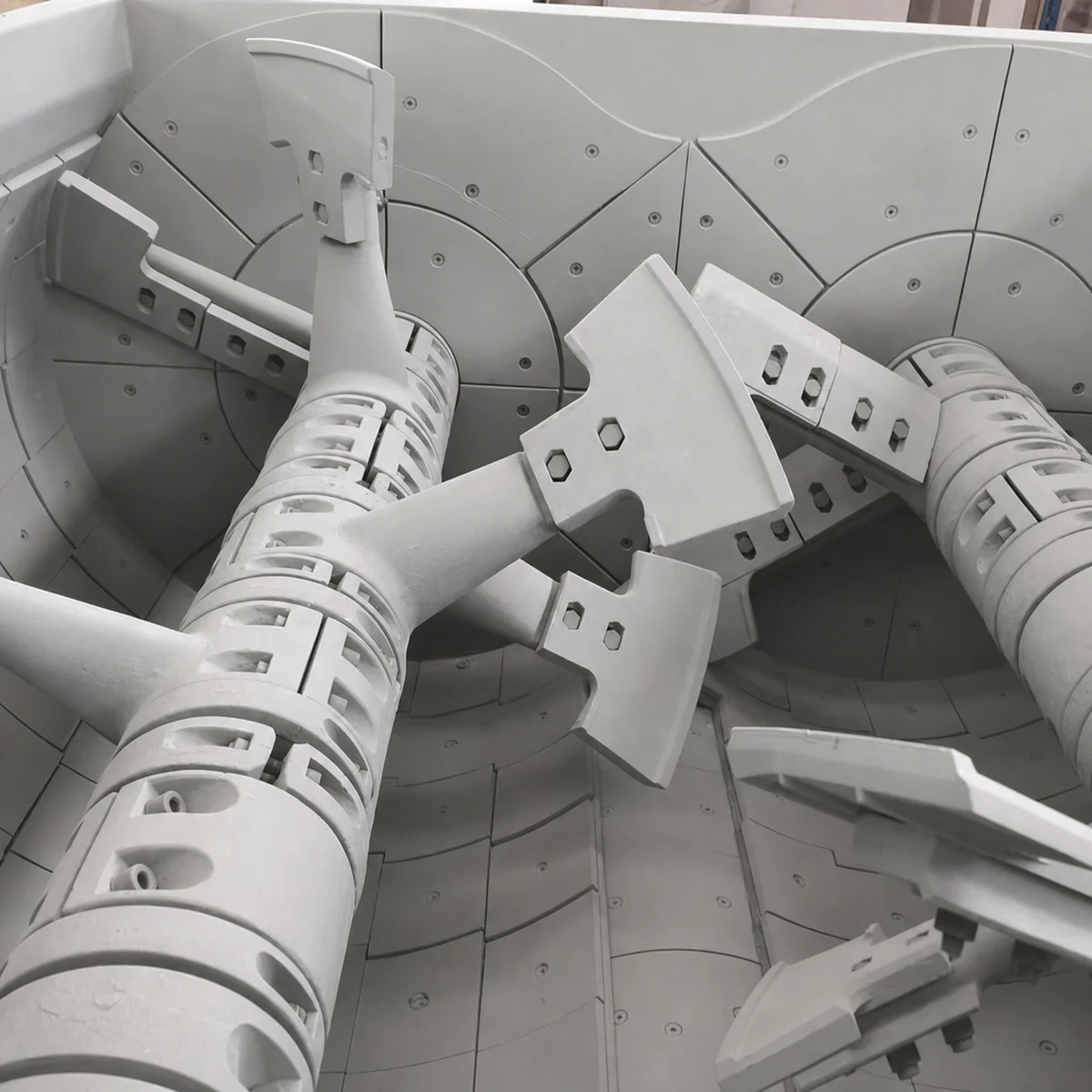
A comprehensive technical guide on concrete mixer liners. Compare Cr20-Cr26 high-chromium cast iron and Ni-Hard 4 metallurgy, calculate wear rates against aggregate hardness, and optimize liner lifespan in ready-mix concrete batching plants.
In commercial ready-mix batching plants, precast concrete factories, and dam construction projects, concrete mixers operate in one of the most punishing tribological environments in industrial engineering. Inside twin-shaft mixers, planetary mixers, and pan mixers, concrete mixer liners—including drum liners, side wall liners, end liners, and discharge door liners—are continuously subjected to high-velocity scouring, heavy sliding abrasion, and severe particle impact.
Every cubic meter of concrete mixed forces hundreds of kilograms of hard, angular aggregate particles (such as quartz sand, crushed granite, basalt, and limestone) to grind directly against the metallic liner surface under high pressure. Standard steel plates or low-alloy cast irons wear thin rapidly under these conditions, leading to unexpected shell gouging, slurry leaks, batch contamination, and catastrophic downtime that can cost batching plant operators thousands of dollars per hour.
This comprehensive technical article, authored by the RAXMEK Metallurgy & Wear Engineering Group, provides a deep dive into the material science, metallurgical chemistry, heat treatment specifications, and tribological mechanics required to optimize concrete mixer liner longevity and minimize your total cost per cubic meter ($/m³) of concrete produced.
1. Tribological Demands on Concrete Mixer Liners
To specify the correct alloy composition for a concrete mixer liner, mechanical engineers must first analyze the three distinct mechanical forces acting inside the mixing trough:
Tribological Forces Operating in Concrete Mixers
High-Stress Scouring: Hard mineral aggregates (Quartz Mohs 7) grind across the liner under multi-ton mixing blade pressure.
Low-to-Moderate Impact: Heavy gravel and crushed rock drop from aggregate weigh hoppers into the revolving mixing drum.
Alkaline Corrosion: Alkaline cement slurry (pH 12 to 13) combined with chemical admixtures accelerates surface oxidation.
1.1 High-Stress Sliding Abrasion
As mixing arms and mixing blades sweep through the dense slurry, aggregate particles are squeezed between the blade tip and the liner surface. Quartz particles (micro-hardness around 900 to 1100 HV) easily gouge soft steel matrices (micro-hardness around 200 to 300 HV). To prevent micro-ploughing and cutting, the liner material must contain hard primary and eutectic carbide phases that exceed the hardness of the abrasive minerals.
1.2 Impact Stress at Aggregate Entry
When aggregate weigh hoppers discharge into empty mixing troughs, coarse gravel (20mm to 40mm) drops from heights of 1 to 2 meters. If the liner material is excessively brittle without adequate fracture toughness, the impact can induce micro-cracking around countersunk bolt holes and lead to spalling failure.
1.3 Alkaline & Chemical Corrosion
Fresh concrete slurry possesses a high pH value (12.5 to 13.5) due to dissolved calcium hydroxide. Furthermore, accelerating admixtures, calcium chloride, and recycled wash water create an environment where corrosion and mechanical abrasion act synergistically. Corrosion strips the passive oxide layer, allowing abrasion to scour away fresh metal at an accelerated rate.
2. Metallurgical Comparison: Selecting the Right Liner Material
Not all cast irons and alloy steels are created equal. The table below provides an engineering comparison of the primary metallic alloys specified for concrete mixer drum, wall, and door liners:
| Material Grade | Chemical Composition (Main Elements) | Heat Treatment State | Matrix Hardness | Micro-Hardness of Carbides | Impact Toughness | Resistance to Quartz Abrasion |
|---|---|---|---|---|---|---|
| Manganese Steel (Hadfield 13% Mn) | C: 1.1–1.4%, Mn: 11–14% | Water Quenched (Austenitic) | 20–25 HRC (Work-hardens to 45) | N/A (Austenite) | Very High (>150 J/cm²) | Low in low-impact mixing |
| Ni-Hard 4 White Iron | C: 2.8–3.6%, Ni: 4.5–7.0%, Cr: 7.0–11.0% | Stress Relieved / Tempered | 58–62 HRC | 1100 to 1400 HV (M3C carbides) | Low to Medium (4 to 7 J/cm²) | Good for fine aggregate slurry |
| Cr15 High-Chromium Cast Iron | C: 2.4–3.2%, Cr: 14.0–17.0%, Mo: 0.5–1.5% | Quenched & Tempered | 60–63 HRC | 1300 to 1600 HV (M7C3) | Medium (6 to 9 J/cm²) | Very Good for general concrete |
| Cr20 High-Chromium Cast Iron (RAXMEK Standard) | C: 2.6–3.4%, Cr: 18.0–22.0%, Mo/V added | Sub-critical Air Quenched & Tempered | 62–65 HRC | 1500 to 1800 HV (M7C3) | High (8 to 12 J/cm²) | Excellent (2.5x life vs Ni-Hard) |
| Cr26 Super High-Chromium Alloy (RAXMEK Premium) | C: 2.8–3.6%, Cr: 24.0–28.0%, Ni/Mo/V modified | Vacuum Heat Treated & Double Tempered | 63–66 HRC | 1600 to 1900 HV (M7C3) | High (10 to 14 J/cm²) | Extreme (Designed for Granite/Basalt) |
3. The Science of High-Chromium Alloy Liners (Cr20–Cr26)
At RAXMEK, our metallurgists specialize in ultra-wear-resistant high-chromium white cast iron liners (Cr20 to Cr26). The superiority of high-chromium alloys over conventional Ni-Hard or manganese steel lies in the structural morphology of their chromium carbides.
Conventional Ni-Hard Iron
Contains continuous Fe3C / M3C carbide networks that create brittle pathways for micro-crack propagation under impact.
Carbide Hardness: 1100 to 1400 HV
RAXMEK Cr20 / Cr26 Alloy
Features isolated, discontinuous M7C3 hexagonal carbides anchored firmly inside a dense tempered martensitic matrix.
Carbide Hardness: 1500 to 1800 HV (Harder than Quartz)
3.1 M7C3 Eutectic Carbide Hardness
In low-alloy irons, chromium content is low, forming continuous networks of M3C (cementite) carbides. M3C carbides have a hardness of only 1100 to 1400 HV, which can be scratched by hard quartz aggregates (1100 HV).
In contrast, RAXMEK Cr20 and Cr26 alloys feature a high chromium-to-carbon ratio (Cr/C at or above 6.5), promoting the formation of isolated, discontinuous M7C3 hexagonal carbides. These M7C3 carbides exhibit micro-hardness levels of 1500 to 1800 HV, acting as impenetrable microscopic armor plates that deflect incoming abrasive aggregate grains.
3.2 Tempered Martensitic Matrix
The secondary phase of the alloy is equally critical. If the matrix supporting the hard carbides is soft ferrite or retained austenite, abrasive aggregate will wash away the matrix, causing the hard carbides to undermine and drop out (a failure mode known as matrix washout).
RAXMEK concrete mixer liners undergo a specialized high-temperature austenitizing followed by controlled air quenching and double sub-critical tempering. This process transforms the matrix into a dense, stress-relieved tempered martensite with an overall bulk hardness of 62 to 66 HRC, guaranteeing firm retention of the M7C3 carbides under extreme shear stresses.
4. Engineering Anatomy & Liner Types in Batching Plants
A twin-shaft or planetary concrete mixer utilizes multiple distinct liner components. Each position requires specific design considerations:
Concrete Mixer Trough Liner Layout Schema
4.1 Concrete Mixer Drum Liners (Bottom & Trough Liners)
- Function: Form the main curved mixing trough beneath the rotating shafts.
- Wear Profile: Severe sliding abrasion combined with continuous aggregate impact. Central drum liners wear up to 30% faster than end liners due to higher material concentration during high-speed mixing cycles.
- RAXMEK Engineering Feature: Precision-radius casting with uniform thickness (15mm to 30mm) and countersunk bolt recesses designed to match OEM mixer specifications (BHS, SICOMA, Liebherr, Twin-Shaft, Teka, etc.).
4.2 Side Wall & End Wall Liners
- Function: Protect the flat vertical walls of the mixer housing and seal around shaft entries.
- Wear Profile: Moderate sliding scour driven by centrifugal slurry motion.
- RAXMEK Engineering Feature: Tapered edge profiles that eliminate slurry pockets and prevent aggregate wedging between wall joints.
4.3 Discharge Door Liners
- Function: Seal the bottom discharge gate where mixed concrete exits into transit mixers or concrete pumps.
- Wear Profile: Extreme shear erosion during rapid door opening and closing cycles under full batch weight.
- RAXMEK Engineering Feature: Reinforced high-chromium casting with precision-machined sealing edges to prevent cement grout leakage (0.5mm clearance tolerance).
5. Cost-Per-Cubic-Meter ($/m³) ROI & Economic Analysis
For procurement managers and plant superintendents, purchasing wear parts based strictly on initial purchase price is a costly mistake. The true evaluation metric is the Cost per Cubic Meter of Mixed Concrete ($/m³).
5.1 Case Study: 3.0 m³ Twin-Shaft Commercial Ready-Mix Batching Plant
- Annual Plant Output: 300,000 m³ of structural concrete (20mm crushed granite aggregate).
- Comparison: Standard Mild Steel / Low-Chromium Liners vs. RAXMEK Cr26 Super High-Chromium Liners.
| Evaluation Metric | Standard Low-Alloy Liners | RAXMEK Cr26 Super Liners | Financial Impact |
|---|---|---|---|
| Initial Liner Set Cost | $3,200 | $5,800 | +$2,600 initial investment |
| Average Liner Service Life | 60,000 m³ | 240,000 m³ | 4x service lifespan |
| Replacement Cycles (per 240k m³) | 4 Sets | 1 Set | Saves 3 replacement cycles |
| Total Liner Procurement Cost | $12,800 | $5,800 | Saves $7,000 in parts |
| Labor & Crane Hire ($2,000/change) | $8,000 (4 changes) | $2,000 (1 change) | Saves $6,000 in maintenance labor |
| Unscheduled Downtime Losses | $18,000 (36 hours) | $4,500 (9 hours) | Saves $13,500 in lost production |
| TOTAL EXPENDITURE (240k m³ Output) | $38,800 | $12,300 | Net Savings: $26,500 |
| NET COST PER CUBIC METER ($/m³) | $0.161 / m³ | $0.051 / m³ | 68.3% Cost Reduction |
Economic Takeaway: By upgrading to RAXMEK Cr26 High-Chromium Mixer Liners, the batching plant reduced its direct liner wear cost per cubic meter by 68.3%, resulting in net operational savings of $26,500 over 240,000 m³ of production, excluding avoided batch contamination costs.
6. Liner Installation, Bolt Torque Specs, and Maintenance Protocol
Improper installation can destroy even the highest grade alloy liner in a matter of days. Follow RAXMEK’s standard maintenance protocol during liner replacement:
6.1 Surface Preparation & Inspection
- Clean Trough Shell: Thoroughly hydro-blast and wire-wheel the internal mixer steel shell to remove hardened concrete scale, rust, and old sealant.
- Inspect Shell Distortion: Use a straightedge to check the mixer shell for sagging or distortion. Shell warpage exceeding 2.0mm over 1.0m must be shammed or repaired before fitting new liners.
6.2 Bolt Torque Specifications & Assembly
Always use high-tensile Grade 8.8 or 10.9 countersunk oval-head liner bolts equipped with polyurethane washers and nylon lock nuts (Nyloc).
| Bolt Diameter (Metric) | Thread Pitch | Recommended Torque (N·m) | Recommended Torque (ft-lbs) |
|---|---|---|---|
| M12 | 1.75 mm | 85 to 95 N·m | 63 to 70 ft-lbs |
| M16 | 2.00 mm | 210 to 230 N·m | 155 to 170 ft-lbs |
| M20 | 2.50 mm | 410 to 450 N·m | 302 to 332 ft-lbs |
IMPORTANT: Re-torque all liner bolts after the first 24 hours (500 m³) of initial operation. Vibration and micro-seating during early mixing cycles can reduce bolt tension by up to 30%.
7. Why Global Concrete Producers Partner with RAXMEK
As an ISO 9001:2015 certified manufacturer specializing in heavy-duty concrete machinery wear parts, RAXMEK combines advanced metallurgical foundry science with precision CNC machining.
- Complete OEM Compatibility: Precision-engineered replacement liners for BHS, SICOMA, Liebherr, SIMI, Teka, ELKON, MEKA, Linz, and custom batching plant mixers.
- 100% Spectrometric Testing: Every heat of RAXMEK high-chromium alloy undergoes optical emission spectrometry to verify exact Cr, C, Mo, V, and Ni chemical ratios.
- Zero Micro-Porosity Guarantee: Vacuum-sealed sand molding and computerized thermal simulation ensure defect-free castings with maximum fracture toughness.
- Extended Wear Warranty: RAXMEK liners are backed by a performance guarantee against premature cracking and excessive wear rate under verified operating parameters.
Request a Customized Wear Audit & Quote
Whether you operate a single 1.0 m³ precast mixer or manage a multi-site ready-mix fleet, RAXMEK engineers are ready to analyze your aggregate abrasiveness and recommend the optimal liner alloy.
- Email Technical Inquiries: info@raxmek.com / sales@votne.com
- Direct Consultation: Submit your mixer model details via our Online Quote Form to receive dimensional engineering drawings and competitive B2B pricing within 24 hours.
الكلمات الدالة
موارد ذات صلة
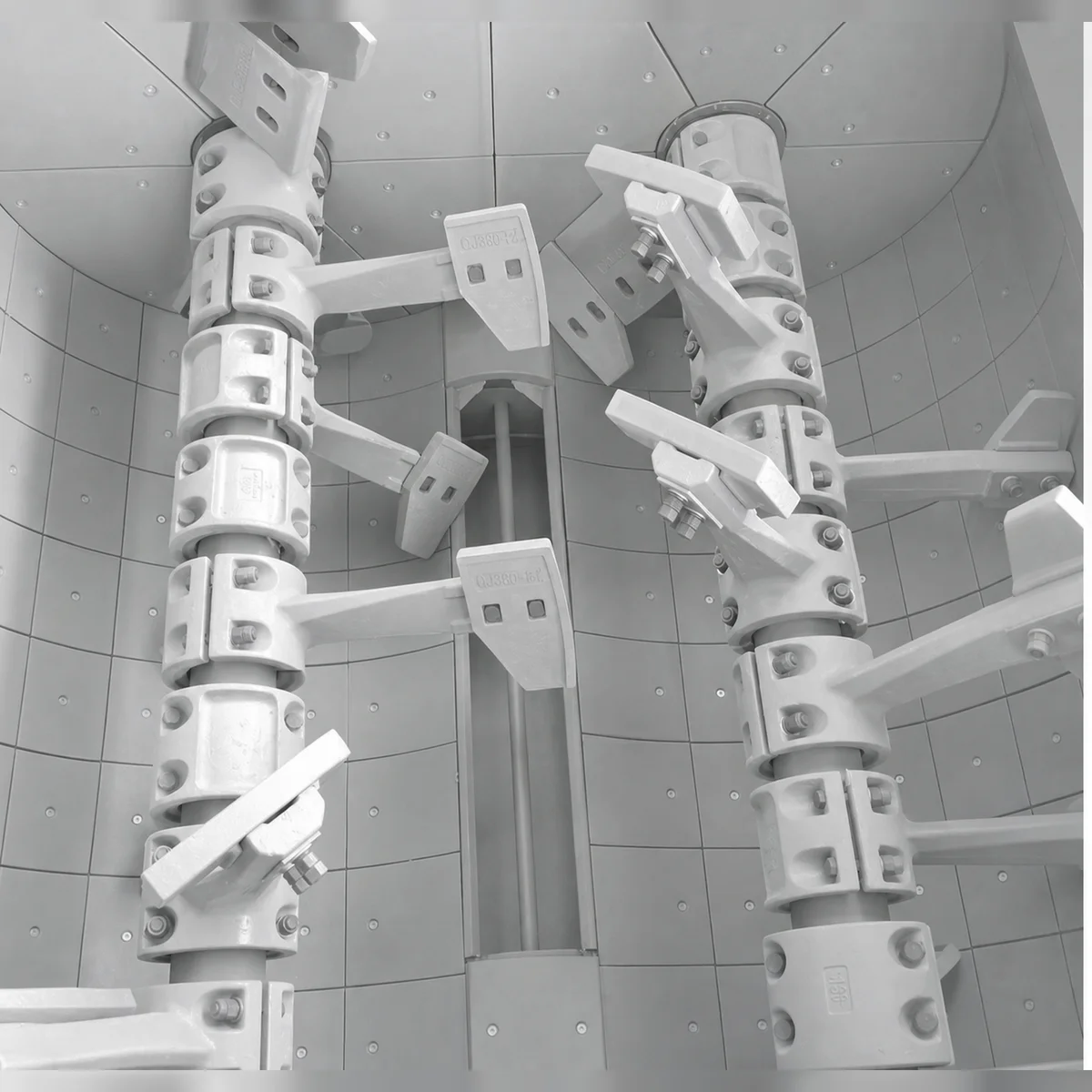
Concrete Mixer Liner Maintenance & Replacement Guide: Troubleshooting Wear Patterns, Bolt Torque Specs, and Downtime Reduction
Uneven liner wear and loose countersunk bolts are the leading causes of mixer drum gouging and unscheduled downtime in batching plants. This guide covers step-by-step maintenance protocols, clearance tuning, and failure prevention.
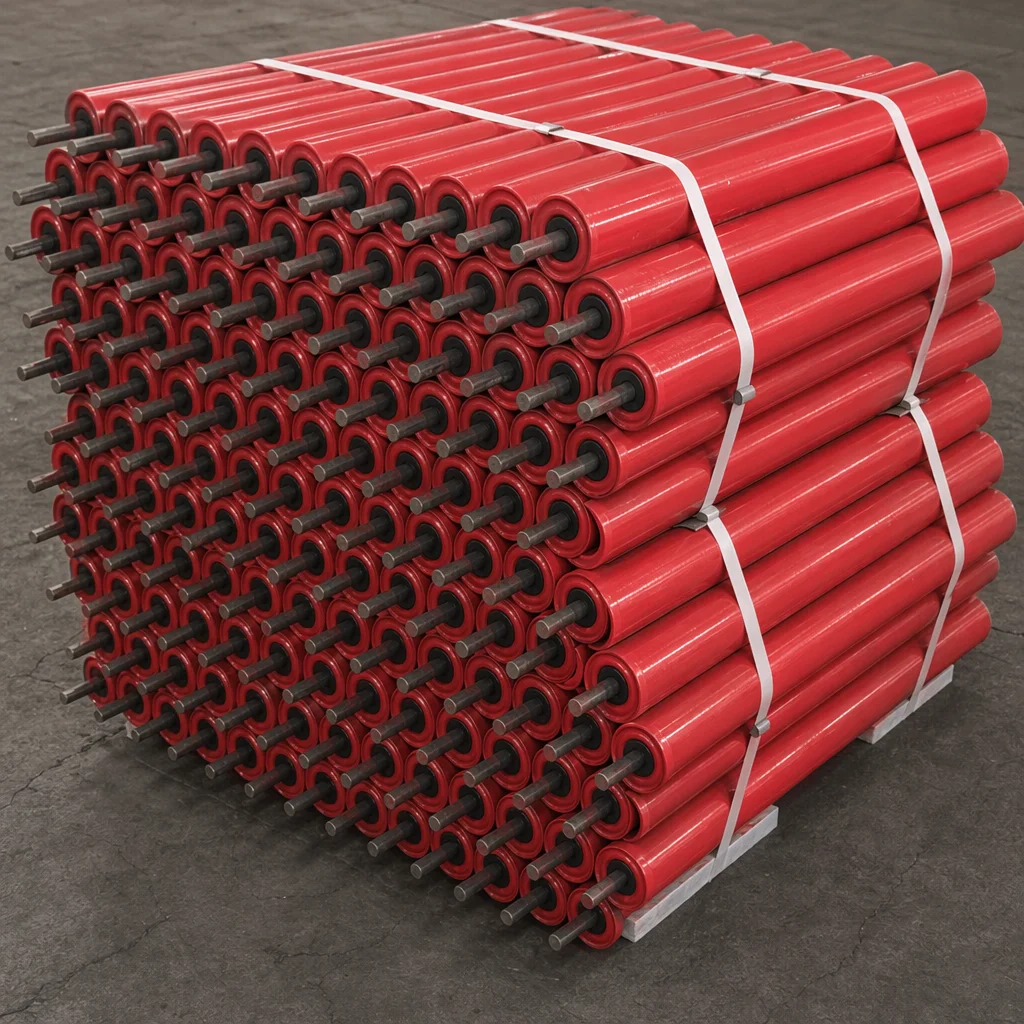
How to Select and Optimize Conveyor Rollers for Heavy-Duty Industrial Applications
Conveyor rollers are the unsung heroes of bulk material handling. Specifying the correct tube thickness, bearing clearance, and sealing system can reduce operational downtime by up to 40%.
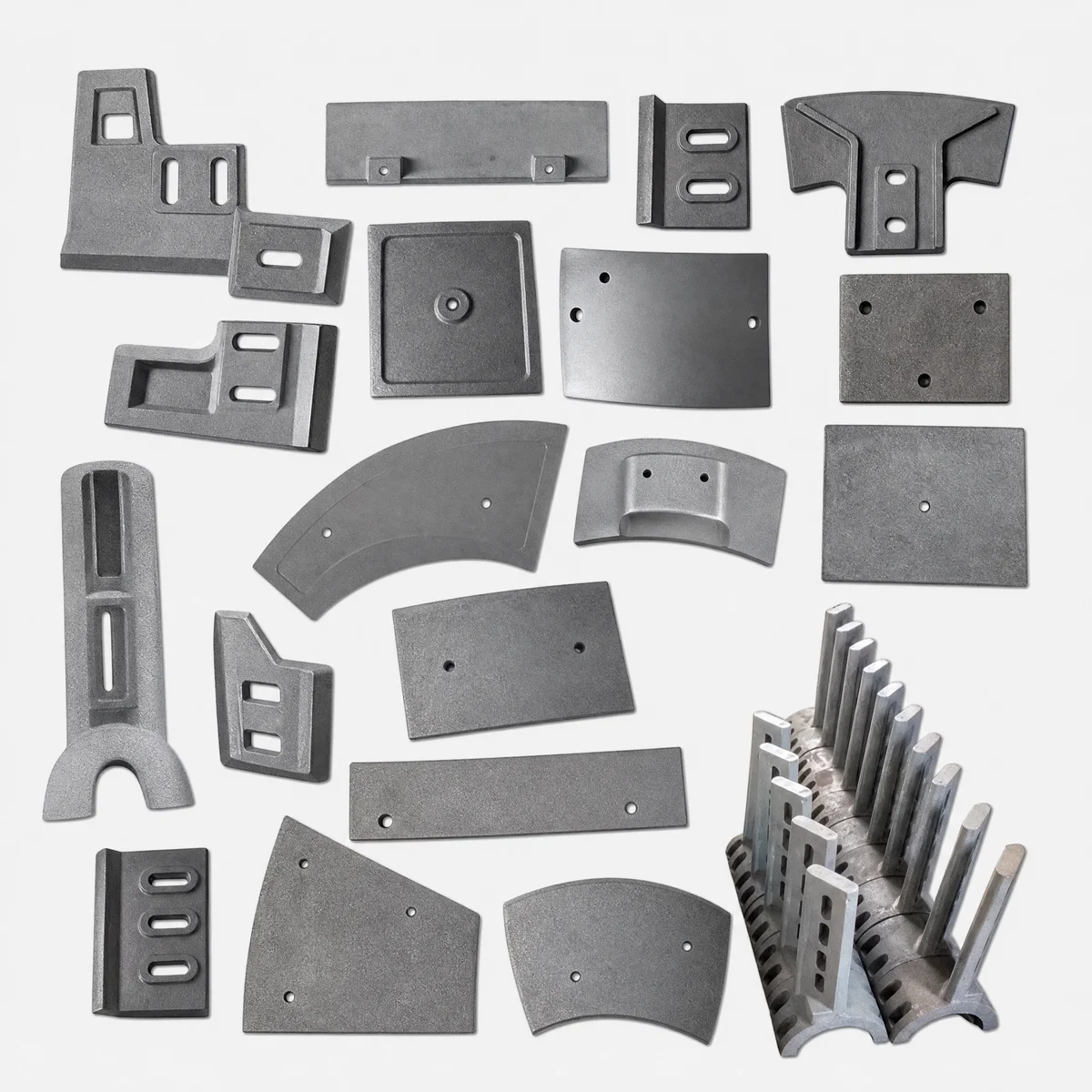
Concrete Mixer Arm Maintenance & Troubleshooting Guide: Preventing Keyway Shearing, Arm Fracture, and Blade Alignment Failures
Loose hub clamp bolts and misaligned mixing arms are the leading causes of mixer shaft keyway shearing and severe liner gouging. Follow this field maintenance guide to calibrate arm pitch and eliminate emergency downtime.